
Payot
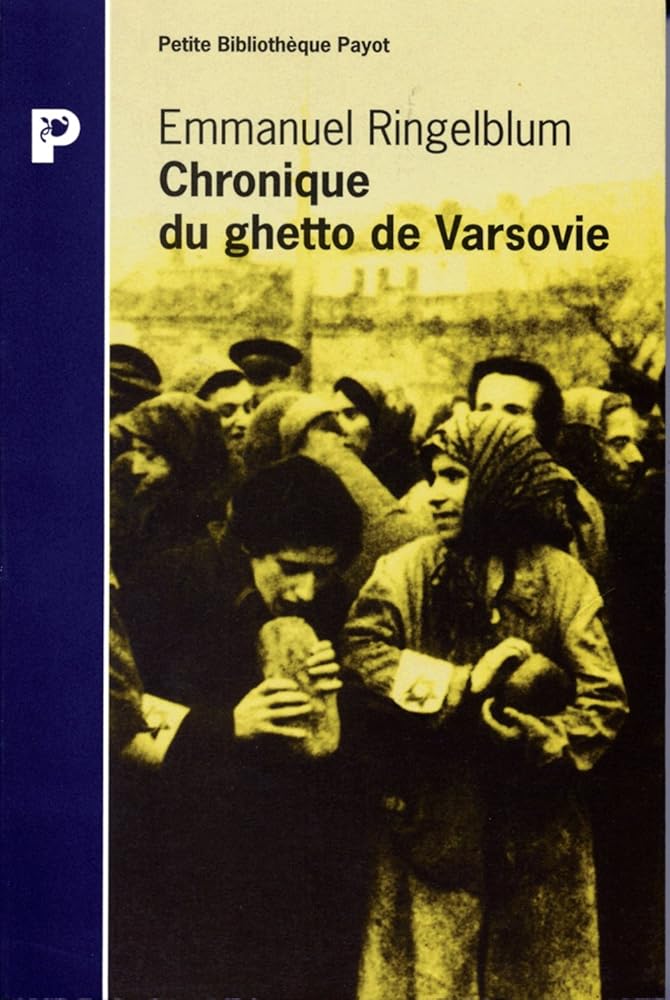
Notes from the Warsaw Ghetto, Emmanuel Ringelblum, Leon Poliakov
Notes from the Warsaw Ghetto, Emmanuel Ringelblum, Leon Poliakov
Couldn't load pickup availability
In the autumn of 1939, German armies occupied Poland. Emmanuel Ringelblum was then thirty-nine years old. A historian, sociologist, and economist, this man of science was also a man of action: a social leader and political activist, he was also one of the organizers of the American Jewish Joint Distribution Committee. Thus, through his very activities, he was at the heart of events: in Warsaw, he was informed of everything that happened to the Jews of Poland. From October 1939, he began to keep his diary: but, if he wanted to bear witness to the catastrophe that had just struck his people, he could not accomplish the task alone. In May 1940, he formed a team: the diary became collective, the "archives" accumulated. If this mass of material could not be put into shape, as Ringelblum and the survivors of his team wished at the beginning of 1943, it was precisely because, at that time, the Nazis were relentlessly attacking the ghetto. On the eve of the April 1943 uprising, the archives and the text of the Chronicle were buried in the soil of Warsaw in two different locations. Recovered, partly in 1946, partly in 1950, these texts had already been published in 1959 in the French version by Léon Poliakov. Reissued today, half a century after the uprising, they remain among the most deeply moving accounts in human history.
Partager